Contents:
- Flowers That Look Like Food: The Most Convincing Lookalikes
- Chocolate Cosmos (Cosmos atrosanguineus)
- Pineapple Lily (Eucomis comosa)
- Monkey Face Orchid (Dracula simia)
- Passion Flower (Passiflora incarnata)
- Squash Blossoms (Cucurbita pepo)
- Edible Flowers That Double as Garden Ornamentals
- Nasturtiums (Tropaeolum majus)
- Viola and Pansy (Viola tricolor and cultivars)
- Borage (Borago officinalis)
- A Sustainability Angle Worth Considering
- Practical Tips for Growing Food-Lookalike Flowers on a Budget
- FAQ: Flowers That Look Like Food
- What flower looks the most like food?
- Are there flowers that taste like food?
- Can you eat flowers that smell like food?
- What edible flowers are easiest to grow in the US?
- Are food-lookalike flowers good for pollinators?
In 17th-century Europe, passion flowers caused theological debate. Spanish missionaries studying them in South America saw the cross, the crown of thorns, and the wounds of Christ in their intricate blooms. But indigenous peoples of the Amazon had a simpler take — the fruit was delicious, and the plant was useful. Both groups were right, but the latter were more practical. That tension between symbolism and utility runs straight through the category of flowers that look like food: these plants fascinate the eye and, often enough, reward the stomach too.
Nature has a long history of visual mimicry. Some flowers evolved to look like insects to attract pollinators. Others developed colors and scents that mimic ripe fruit to encourage seed dispersal. The result, from a gardener\’s perspective, is a surprisingly large roster of blooms that trigger your appetite before you\’ve even touched them.
Flowers That Look Like Food: The Most Convincing Lookalikes
Chocolate Cosmos (Cosmos atrosanguineus)
This is the heavyweight. Chocolate cosmos produces deep burgundy-brown blooms that genuinely smell of vanilla and cocoa — compounds called sesquiterpenes create that warm, sweet scent. Native to Mexico, it\’s unfortunately extinct in the wild but widely available as nursery stock. In the US, it thrives in USDA Zones 7–10 and reaches about 24 inches tall. Budget tip: buy a single tuber for $6–10, divide it after the first season, and you\’ll have multiple plants for free the following year.
Pineapple Lily (Eucomis comosa)
The resemblance here is architectural. Pineapple lily sends up a dense spike of small star-shaped flowers topped with a tuft of green bracts — the silhouette is unmistakably pineapple. The flowers also carry a mild, fruity scent. Hardy in Zones 7–10, these bulbs cost around $5–8 each and multiply readily. Plant them in full sun with well-drained soil, and a single bulb can produce 3–5 offsets per season.
Monkey Face Orchid (Dracula simia)
Found in the cloud forests of Ecuador and Peru at elevations above 3,000 feet, this orchid\’s arrangement of petals and sepals forms a face that looks startlingly like a small primate — but the scent is ripe orange. It\’s not food, and it\’s nearly impossible to grow outside its native climate, but it belongs on this list purely for the fruit-mimicry at play in its fragrance strategy.
Passion Flower (Passiflora incarnata)
The bloom itself looks like something assembled by a committee: layered petals, a corona of purple-and-white filaments, and a central structure that resembles a tiny alien meal. The actual fruit — maypop — is edible, tart, and about the size of a golf ball. Passiflora incarnata is cold-hardy to Zone 6, spreads aggressively (budget-friendly once established), and can be harvested for both fruit and medicinal tea from the leaves.
Squash Blossoms (Cucurbita pepo)
These blossoms don\’t just look like food — they are food. Bright orange and shaped like a trumpet, squash blossoms are a staple in Mexican and Italian cooking. Male blossoms appear earlier in the season and can be harvested freely without reducing fruit yield. Stuff them with ricotta and herbs, dip in a light batter, and fry. A single zucchini plant costs under $3 as a seedling and produces blossoms all summer in Zones 3–10.
Edible Flowers That Double as Garden Ornamentals
Nasturtiums (Tropaeolum majus)
Peppery, bright, and almost aggressively cheerful — nasturtiums are one of the easiest edible flowers available. The leaves taste like arugula; the flowers taste like a milder version of the same. A seed packet costs $2–4 and germinates in 7–12 days. They thrive in poor soil (actually bloom better when you don\’t fertilize) and reseed themselves freely. That\’s about as sustainable as annual gardening gets.
Viola and Pansy (Viola tricolor and cultivars)
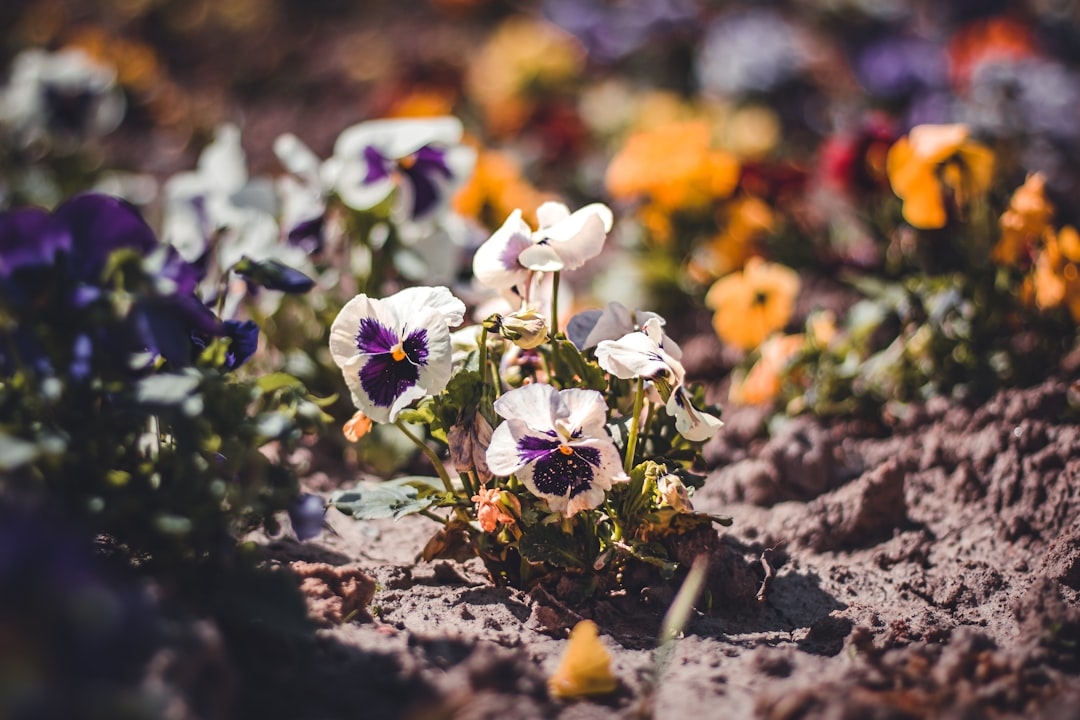
Viola petals are mild in flavor — slightly grassy with a hint of wintergreen — but visually dramatic on a plate. They\’re used in upscale restaurants as garnish and in cake decoration. A six-pack of violas runs $4–6 at most garden centers, and the plants flower for months in cool weather. In Zones 6–10, they\’ll often overwinter and bloom again in spring.
Borage (Borago officinalis)
Star-shaped and an intense electric blue, borage flowers taste faintly of cucumber. They\’re traditional in Pimm\’s cups and summer cocktails, and they freeze beautifully into ice cubes. Borage self-seeds so reliably that you\’ll rarely need to buy it again after the first season — a strong argument for planting it once and letting it naturalize.
A Sustainability Angle Worth Considering
Growing edible and food-lookalike flowers fits naturally into a low-waste garden philosophy. Many of these plants — borage, nasturtiums, passion flower — are vigorous self-seeders that eliminate the need for annual repurchasing. Several, like pineapple lily and chocolate cosmos, multiply through division. Planting any of them also supports pollinators: borage is particularly valued by bumblebees, and passion flower is the sole larval host plant for Gulf Fritillary butterflies across the southern US. You\’re feeding the eye, sometimes the stomach, and the local ecosystem simultaneously.
If you\’re buying from nurseries, look for those that carry regionally appropriate cultivars grown without neonicotinoid pesticides — especially important for plants you intend to eat. Ask directly; most independent nurseries will tell you straight.
Practical Tips for Growing Food-Lookalike Flowers on a Budget
- Start from seed where possible. Nasturtiums, borage, and violas are all cheap and easy from seed. Reserve your budget for the specialty items like chocolate cosmos tubers or pineapple lily bulbs.
- Trade with neighbors. Passion flower spreads fast. One established plant can yield multiple divisions annually. Local gardening Facebook groups and Nextdoor communities are full of people giving these away.
- Time your purchases. End-of-season bulb sales (August–October) often drop prices by 50–70% on eucomis and similar specialty bulbs. They store fine in a cool, dry location over winter.
- Container growing works. Pineapple lily and chocolate cosmos both perform well in 10–12 inch pots, which means apartment gardeners aren\’t excluded.
- Harvest correctly. For edible flowers, pick in the morning after dew has dried but before midday heat. Refrigerate between damp paper towels and use within 2–3 days for best flavor and appearance.
FAQ: Flowers That Look Like Food
What flower looks the most like food?
Chocolate cosmos is the strongest case — it both looks and smells like chocolate due to natural sesquiterpene compounds in the bloom. Pineapple lily wins on visual resemblance alone, with its unmistakable pineapple silhouette.
Are there flowers that taste like food?
Yes. Nasturtiums taste peppery like arugula, borage flowers taste of cucumber, and passion fruit (from the passion flower vine) tastes tart and tropical. Squash blossoms have a mild, slightly sweet flavor.
Can you eat flowers that smell like food?
Not always. Chocolate cosmos smells like cocoa but is not edible. Always verify edibility separately from scent — use a reliable edible flower reference like the USDA database or a university extension guide before consuming any flower.
What edible flowers are easiest to grow in the US?
Nasturtiums, violas, and borage are the easiest. All three germinate quickly, tolerate a range of conditions, cost under $5 to start, and produce abundantly across most US growing zones.
Are food-lookalike flowers good for pollinators?
Many are excellent pollinator plants. Borage attracts bumblebees intensely. Passion flower supports Gulf Fritillary butterfly larvae. Squash blossoms require bee pollination to set fruit. Growing these plants contributes meaningfully to local pollinator populations.
The best place to start is wherever your budget lands. A $2 packet of nasturtium seeds gives you edible, food-resembling blooms within six weeks. A $10 chocolate cosmos tuber gives you a conversation piece that smells like dessert all summer. Pick one, grow it well, and your eye for these plants will sharpen fast — you\’ll start noticing food resemblances in half the flowers you pass.