Contents:
- Why Some Plants Evolved to Eat Insects
- Which Flowers Actually Eat Bugs?
- Venus Flytrap (Dionaea muscipula)
- Pitcher Plants (Sarracenia, Nepenthes, Darlingtonia)
- Sundews (Drosera)
- Bladderworts (Utricularia)
- Butterworts (Pinguicula)
- Carnivorous Plants for Events and Décor
- Growing Carnivorous Bug-Eating Plants at Home
- The Eco-Friendly Case for Carnivorous Plants
- FAQ: Flowers That Eat Bugs
- Do flowers actually eat bugs, or is it just the leaves?
- Are carnivorous plants safe around pets and children?
- How often do carnivorous plants need to eat bugs?
- Can I use carnivorous plants to control mosquitoes in my yard?
- Where can I buy carnivorous plants in the US?
- Ready to Add a Bug-Eating Plant to Your Space?
Most people expect flowers to attract butterflies and bees. Discovering that some plants actively trap and digest insects tends to stop people mid-scroll. Whether you stumbled onto this topic while planning a garden, a nature-themed event, or just fell down a curiosity rabbit hole, you\’re in the right place. The plants that eat bugs are genuinely strange, surprisingly beautiful, and more useful — and accessible — than most people realize.
Why Some Plants Evolved to Eat Insects
Carnivorous plants didn\’t develop their bug-catching abilities out of aggression. They evolved in nutrient-poor environments — think waterlogged bogs, acidic soils, and rocky outcroppings where nitrogen and phosphorus are nearly absent. Trapping and digesting insects became their workaround for getting the nutrients that soil simply couldn\’t provide.
There are over 800 known species of carnivorous plants worldwide, spread across 20 plant families. They\’ve evolved independently at least six separate times across different continents — a remarkable example of convergent evolution. The trapping mechanisms fall into five main categories: pitfall traps, flypaper traps, snap traps, bladder traps, and lobster-pot traps. Each works differently, and several produce striking flowers alongside their prey-catching structures.
Which Flowers Actually Eat Bugs?
Here\’s where the terminology gets a little technical. Carnivorous plants are often called “carnivorous flowers” colloquially, but the flower itself is rarely the trap. The blooms exist for pollination — they\’re often held high above the trap to avoid catching the very insects that spread their pollen. That said, the overall plant produces beautiful blooms, and in everyday conversation, calling them flowers that eat bugs is perfectly reasonable.
Venus Flytrap (Dionaea muscipula)
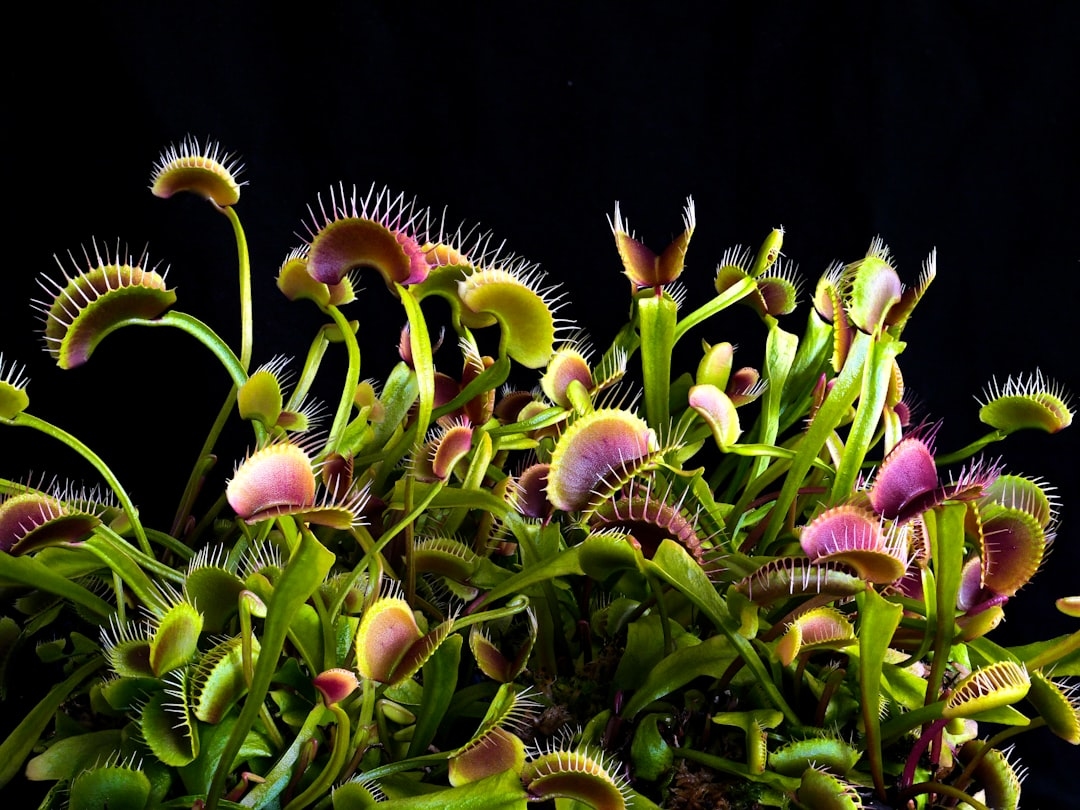
The most iconic of them all. The Venus flytrap produces delicate white flowers on tall stems, well above its jaw-like traps. Native only to a small region of North and South Carolina, each trap closes in about 100 milliseconds — one of the fastest plant movements on Earth. It digests soft-bodied insects like flies, ants, and occasionally small spiders over 5 to 12 days.
Pitcher Plants (Sarracenia, Nepenthes, Darlingtonia)
Pitcher plants are among the most architecturally dramatic. Sarracenia species are native to North America and produce tall, elegant pitchers in deep reds, greens, and yellows — genuinely ornamental. Their flowers are nodding and unusual, resembling upside-down umbrellas. The pitchers fill with digestive fluid and lure insects downward with nectar, color, and scent. Tropical Nepenthes species produce hanging pitchers that can hold up to 3.5 liters in larger specimens — some have even been documented trapping small rodents.
Sundews (Drosera)
Sundews are among the most widespread carnivorous plants, with over 200 species found on every continent except Antarctica. Their leaves are covered in glistening, sticky tentacles that look deceptively like dewdrops. Insects land, get stuck, and are slowly digested as the leaf curls around them. Drosera produces small, cheerful flowers — often pink or white — that open for just a few hours each day.
Bladderworts (Utricularia)
These are underwater hunters. Bladderworts are rootless aquatic plants that use tiny bladder-like traps to suck in water fleas and mosquito larvae at astonishing speed — the trap door opens and closes in under 1 millisecond. Above the waterline, they produce snapdragon-like flowers in yellow, purple, and white that are genuinely pretty. They\’re often overlooked, but Utricularia is actually the largest genus of carnivorous plants.
Butterworts (Pinguicula)
Butterworts are the most understated of the group. Their broad, flat leaves are covered in a glistening, greasy mucilage that traps small insects and even fungus gnats. The flowers are violet-like — delicate, often purple or pink — and bloom reliably in spring. They\’re popular as natural pest control on windowsills because they target the same tiny gnats that plague houseplants.
Carnivorous Plants for Events and Décor
If you\’re researching these plants for a specific event — a nature-themed wedding, a science party, a Halloween display, or a botanical garden visit — carnivorous plants make genuinely striking centerpieces and conversation starters. Sarracenia pitchers in particular photograph beautifully and hold their structure for days after cutting, similar to tropical foliage. A small arrangement of three to five pitcher plants in a moss-lined terrarium typically costs between $35 and $80 depending on species and sourcing.
For larger events, renting potted carnivorous plant displays from specialty nurseries is increasingly available in major US cities. Expect to pay $150 to $400 for a curated table display rental, including delivery and pickup. Buying plants outright from reputable growers like California Carnivores or Sarracenia Northwest runs $8 to $45 per plant for common species, with rare Nepenthes hybrids reaching $100 or more.
Growing Carnivorous Bug-Eating Plants at Home
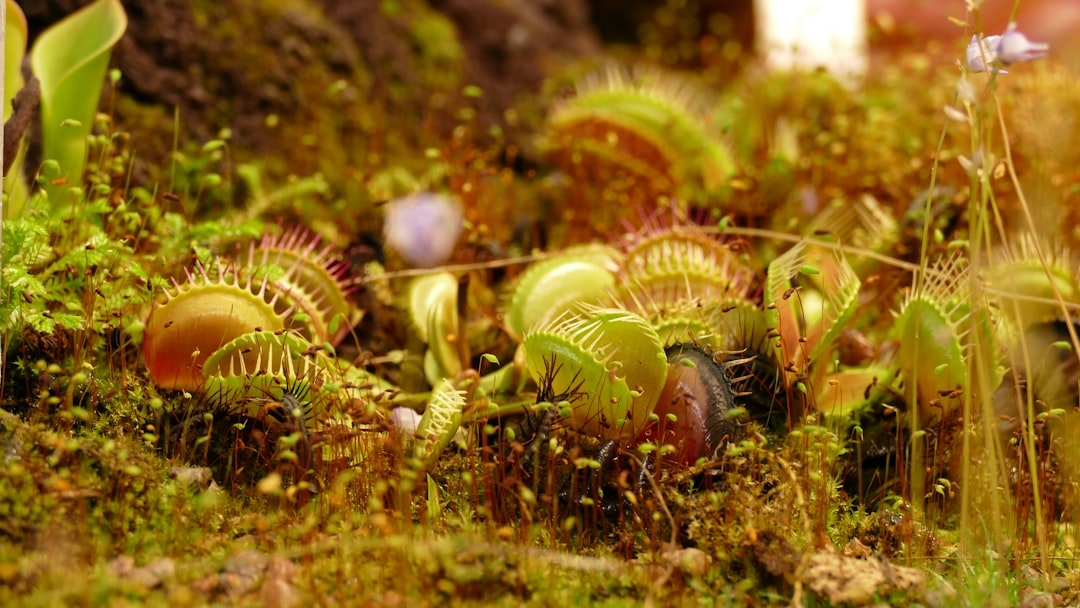
Most carnivorous plants have a reputation for being difficult. That reputation is partly earned — they have specific needs — but those needs are consistent and manageable once understood.
- Water: Use only distilled, reverse osmosis, or rainwater. Tap water contains minerals that accumulate and kill them. The “tray method” — keeping pots sitting in 1 to 2 inches of water — works well for most bog species.
- Soil: Pure sphagnum moss or a 1:1 mix of peat moss and perlite. No fertilizer, ever. The bugs are the fertilizer.
- Light: Most need 4 to 6 hours of direct sunlight daily. A south-facing windowsill or outdoor placement in USDA Hardiness Zones 6–9 works for Sarracenia and Venus flytraps.
- Dormancy: Temperate species like Venus flytraps and North American pitcher plants require a winter dormancy of 3 to 4 months with cooler temperatures (35–50°F). Skipping this shortens their lifespan significantly.
The Eco-Friendly Case for Carnivorous Plants
There\’s a genuinely sustainable angle here that doesn\’t require stretching. Butterworts and sundews placed near houseplants eliminate fungus gnats without pesticides. A single mature Pinguicula can catch dozens of gnats per week passively, with zero chemical input. For gardeners trying to reduce their reliance on insecticides, incorporating carnivorous plants into a patio or greenhouse setup is a practical, low-maintenance strategy.
On a broader scale, bog ecosystems — the native habitat of most carnivorous plants — are critical carbon sinks. Supporting nurseries that propagate carnivorous plants from tissue culture rather than wild collection helps protect these habitats. Organizations like the International Carnivorous Plant Society maintain lists of ethical growers. Wild collection remains a serious conservation threat: wild Venus flytrap populations have declined by more than 90% in their native range due to poaching and habitat loss.
FAQ: Flowers That Eat Bugs
Do flowers actually eat bugs, or is it just the leaves?
The trapping and digestion happens in specialized leaves or modified leaf structures — not the flowers. The flowers of carnivorous plants are typically held away from the traps to protect pollinators. However, the whole plant is commonly called a “carnivorous flower” or a “flower that eats bugs” in everyday language.
Are carnivorous plants safe around pets and children?
Yes. No carnivorous plant sold commercially poses any danger to humans or pets. Venus flytraps can close around a fingertip but cause no harm. The digestive enzymes are mild and only effective on small invertebrates.
How often do carnivorous plants need to eat bugs?
Outdoors, they catch enough prey on their own. Indoors, feeding once or twice a month with a small live or freeze-dried insect is sufficient. Overfeeding — offering prey too large or too frequently — can damage traps or trigger rot.
Can I use carnivorous plants to control mosquitoes in my yard?
Aquatic bladderworts (Utricularia) target mosquito larvae in standing water effectively. Terrestrial carnivorous plants catch adult mosquitoes only occasionally and shouldn\’t be relied on as a primary mosquito control strategy.
Where can I buy carnivorous plants in the US?
Reputable online sources include California Carnivores, Sarracenia Northwest, and the Carnivorous Plant Nursery. Many independent botanical gardens also sell plants in their gift shops. Avoid big-box store plants, which are often grown in incorrect media and poorly conditioned for long-term survival.
Ready to Add a Bug-Eating Plant to Your Space?
Start with a Sarracenia purpurea — the purple pitcher plant. It\’s cold-hardy across most of the US (Zones 2–9), visually dramatic, tolerates partial shade better than most carnivorous plants, and is widely available for under $15. Place it in a south-facing spot in a tray of distilled water, and it will handle its own pest control while turning heads all summer. From there, the rabbit hole goes as deep as you want it to.