Contents:
- Why Plants Produce Near-Black Pigmentation
- The Best Naturally Black Flowers You Can Actually Grow
- Black Pansy (Viola × wittrockiana \’Moldy Cheese\’ or \’Black Moon\’)
- Black Hollyhock (Alcea rosea \’Nigra\’)
- Black Bat Flower (Tacca chantrieri)
- Queen of Night Tulip (Tulipa \’Queen of Night\’)
- Black Hellebore (Helleborus × hybridus \’Black Diamond\’)
- Regional Differences in Growing Dark Flowers
- Expert Perspective
- Common Mistakes to Avoid
- Caring for Dark Flowers in Small Spaces
- FAQ: Naturally Black Flowers
- Are there any truly black flowers in nature?
- What is the easiest naturally black flower to grow?
- Can I grow black flowers indoors?
- Do black flowers attract pollinators?
- Where can I buy naturally black flower seeds or plants in the US?
- Ready to Add Darkness to Your Space?
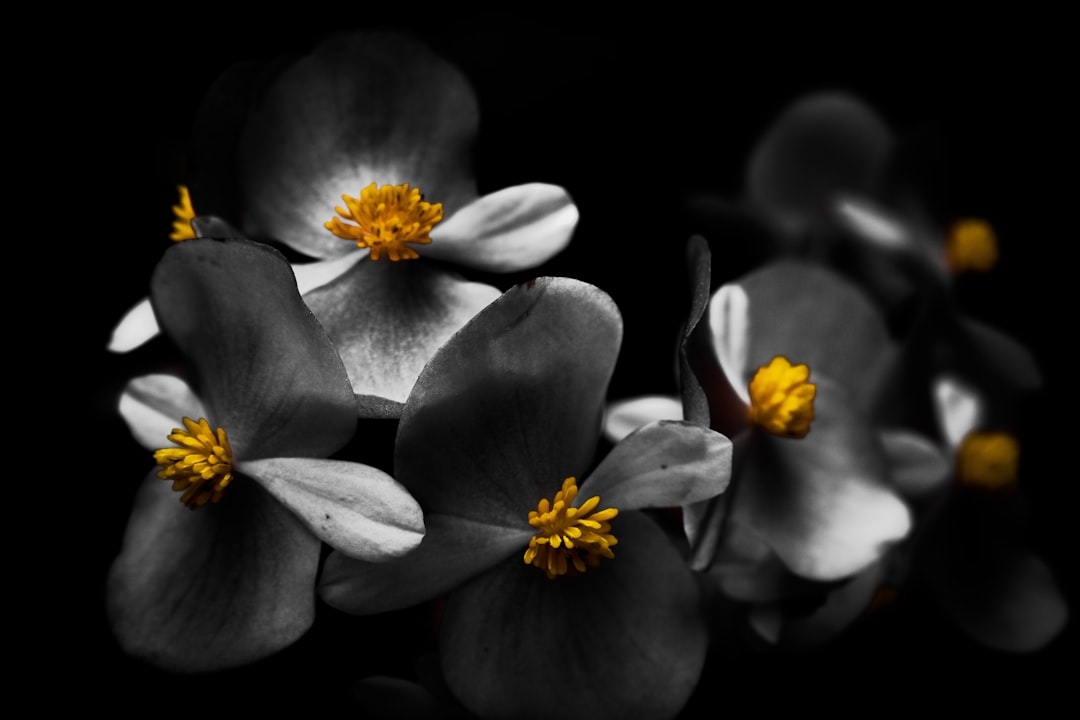
Black flowers are the rare exception that breaks every rule in the garden. Most gardeners spend their lives chasing pastels and brights — but a genuinely dark, near-black bloom stops people cold. Here\’s the truth: pure black flowers don\’t exist in nature. What does exist is something arguably more interesting — dozens of cultivars and wild species so deeply pigmented with anthocyanins that they photograph black, read as black to the human eye, and are sold as black by every reputable nursery in the US.
If you\’re working with a balcony container or a single windowsill planter, these naturally black flowers are some of the most dramatic plants you can grow in limited square footage. A single pot of black pansies costs around $6–$12 at most garden centers and delivers color from early spring through first frost.
Why Plants Produce Near-Black Pigmentation
The deep coloration in so-called black flowers comes from an overproduction of anthocyanins — the same pigment family responsible for red cabbage, blueberries, and purple basil. When anthocyanins accumulate in extremely high concentrations in petal cells, they absorb almost all visible light wavelengths, producing what our eyes register as black or near-black.
True optical black would require 100% light absorption. Plant cells can\’t achieve that, which is why even the darkest blooms reveal deep burgundy, navy, or plum tones when held up to direct sunlight. This isn\’t a flaw. It\’s part of what makes these plants so visually layered.
Interestingly, soil pH and light exposure influence how dark these flowers actually appear at maturity. Plants grown in slightly acidic soil (pH 6.0–6.5) with afternoon shade tend to hold their darkest pigmentation longer than those baking in full sun all day.
The Best Naturally Black Flowers You Can Actually Grow
Black Pansy (Viola × wittrockiana \’Moldy Cheese\’ or \’Black Moon\’)
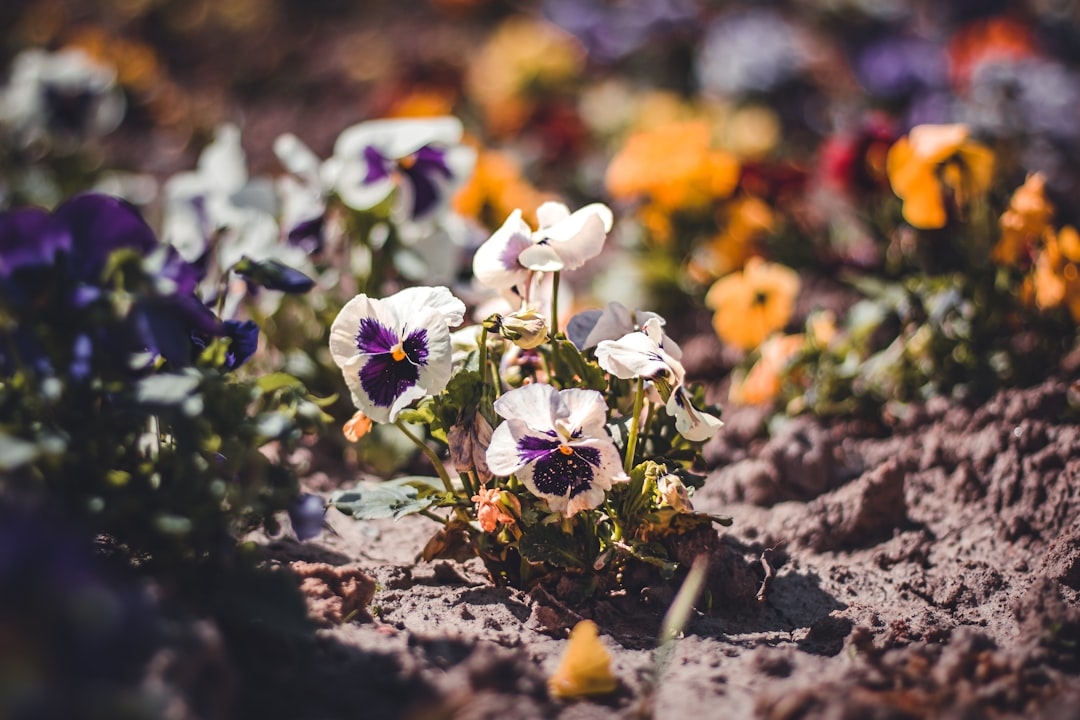
The most accessible dark flower for container gardeners. Black pansies are true cool-season performers, thriving in USDA Hardiness Zones 4–8 during spring and fall. A 4-inch pot transplant runs about $3–$5 at most big-box garden centers. They max out at 6–9 inches tall, making them ideal for window boxes or the front edge of a container arrangement.
Black Hollyhock (Alcea rosea \’Nigra\’)
This is one of the few plants where the species itself, not just a modern cultivar, produces genuinely near-black blooms. Alcea rosea \’Nigra\’ has been documented in European gardens since the 1600s. It\’s a biennial that reaches 5–6 feet — not ideal for a 10-inch pot, but manageable in a deep half-barrel planter on a patio. Start from seed ($3–$6 per packet) for the most economical route.
Black Bat Flower (Tacca chantrieri)
This is the wild card. Native to tropical Southeast Asia, the black bat flower produces genuinely near-black blooms with dramatic trailing filaments that can reach 12 inches long. It requires high humidity, indirect light, and temperatures above 60°F year-round. In the US, it\’s primarily a houseplant success story in Florida, Hawaii, and the Pacific Northwest. Expect to pay $15–$35 for a starter plant online.
Queen of Night Tulip (Tulipa \’Queen of Night\’)
A late-season tulip that blooms deep maroon-black in late April to early May. Bulbs cost roughly $1–$2 each when bought in fall, and a pot of 5–7 bulbs creates a striking display for apartment balconies. They thrive in Zones 3–7 and need a cold vernalization period of at least 12 weeks, so plant them in October or November.
Black Hellebore (Helleborus × hybridus \’Black Diamond\’)
For gardeners in Zones 4–9 who want something evergreen and long-blooming, the \’Black Diamond\’ hellebore is a standout. It blooms February through April — months when almost nothing else is flowering — and handles shade beautifully. A 1-gallon nursery pot typically runs $12–$20.
Regional Differences in Growing Dark Flowers
Growing conditions vary significantly across the US, and that changes which dark-flowering plants make the most sense for your space.
In the Northeast, the cool springs and cold winters are actually an advantage. Black pansies overwinter as annuals and can be planted as early as March. Queen of Night tulips perform exceptionally well from Maine to Maryland, with their cold vernalization requirement met naturally.
In the South (Zones 8–10), the heat is the enemy of cool-season dark flowers. Black pansies struggle past May. Instead, Southern gardeners should pivot to the black bat flower, black-eyed Susan cultivars with very dark centers, or tropical alternatives like the \’Blackbird\’ Colocasia — an elephant ear relative with near-black foliage that complements darker blooms.
On the West Coast, particularly in Northern California and the Pacific Northwest, the mild, foggy climate is ideal for hellebores and black hollyhocks. Seattle and Portland gardeners can keep hellebores in containers year-round on covered patios with almost no intervention.
Expert Perspective
“Most people buy one dark flower and plant it alone, then wonder why it doesn\’t pop,” says Renata Hollis, Certified Horticulturist and owner of Duskbloom Nursery in Asheville, NC. “The trick is contrast. Pair naturally black flowers with silver foliage like dusty miller or bright chartreuse sweet potato vine. That\’s when the dark color reads as dramatic instead of just murky.”
Hollis also recommends avoiding black mulch with dark-flowering plants in containers. “The visual noise competes with the bloom. Go with light gravel or white stones as a top dressing — it makes those dark petals look intentional.”
Common Mistakes to Avoid
- Overwatering in containers. Dark-flowering plants like hellebores and bat flowers are especially prone to root rot. Use a well-draining potting mix and containers with drainage holes — no exceptions.
- Buying mislabeled plants. Some online sellers list regular burgundy or deep purple flowers as “black.” Check for cultivar names like \’Nigra\’, \’Queen of Night\’, or \’Black Diamond\’ to confirm you\’re getting the real thing.
- Planting in too much sun. Full afternoon sun fades anthocyanin pigmentation faster. Morning sun with afternoon shade preserves the darkest color in almost all varieties.
- Ignoring seasonal timing. Black pansies die in summer heat. Tulip bulbs rot if planted in warm soil. Timing is as critical as any other care factor.
- Skipping the contrast. A single dark flower in a dark pot against a dark wall disappears. Design for contrast from the start.
Caring for Dark Flowers in Small Spaces
Container gardening with dark-flowering plants is straightforward once you match the plant to the season and the pot to the plant\’s root depth. Hollyhocks need a minimum 15-gallon container. Pansies thrive in a 6-inch pot. Hellebores do well in anything 10 inches or deeper.
Feed container-grown dark flowers with a balanced slow-release fertilizer (10-10-10) at the start of the season, then switch to a low-nitrogen formula once buds appear. Excess nitrogen pushes leafy growth at the expense of flowering — the last thing you want from a plant you\’re growing specifically for its blooms.
Deadhead pansies and hollyhocks regularly to extend the bloom period by 3–4 weeks. Hellebores are an exception — leave spent flowers on the plant to allow self-seeding, which is how you get more plants for free.
FAQ: Naturally Black Flowers
Are there any truly black flowers in nature?
No flower is optically pure black. The darkest blooms — like Alcea rosea \’Nigra\’ and the black bat flower — appear black due to extreme anthocyanin concentration but reveal deep purple or maroon tones in direct sunlight.
What is the easiest naturally black flower to grow?
Black pansies (Viola × wittrockiana in dark cultivars like \’Black Moon\’) are the most beginner-friendly. They\’re widely available, inexpensive, and thrive in containers from early spring through fall in most US climates.
Can I grow black flowers indoors?
Yes — the black bat flower (Tacca chantrieri) is the best indoor option. It needs indirect bright light, high humidity (above 60%), and temperatures consistently above 60°F. A bathroom with a bright window can work well.
Do black flowers attract pollinators?
Yes. Despite their unusual color, near-black flowers still attract bees and butterflies, which navigate partly by UV patterns invisible to humans. Black hollyhocks are particularly well-visited by bumblebees.
Where can I buy naturally black flower seeds or plants in the US?
Reputable sources include Baker Creek Heirloom Seeds, Proven Winners, and local independent nurseries. For rare varieties like black bat flower, specialty online retailers like Logee\’s Plants or Plant Delights Nursery carry stock seasonally.
Ready to Add Darkness to Your Space?
Start with one plant this season — a $6 flat of black pansies or a packet of Alcea rosea \’Nigra\’ seeds is a low-stakes way to see how dark flowers work in your specific light conditions and space. Once you understand how naturally black flowers behave in your microclimate, you can build a more intentional container arrangement around them. The goal isn\’t a gloomy pot — it\’s a high-contrast, sophisticated display that no one else on your block is pulling off.