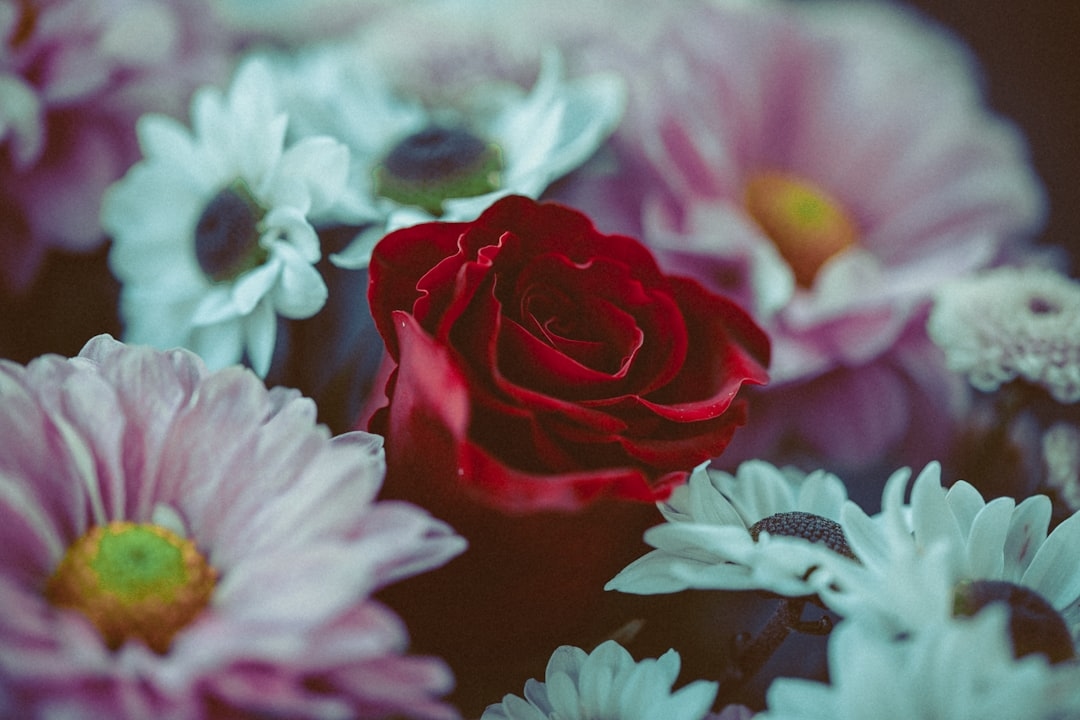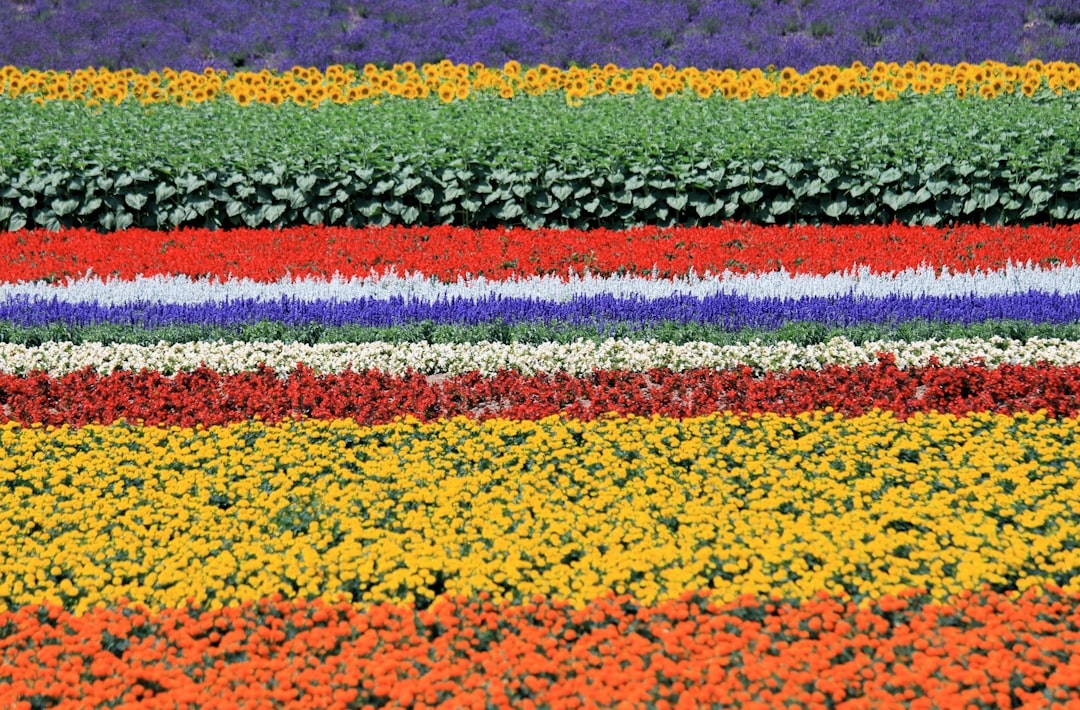
Contents:
- The Chemistry Behind Flower Color
- Flavonoids and Anthocyanins
- Carotenoids
- Chlorophyll and the Absence of Color
- Why Flowers Evolved Different Colors: The Pollinator Connection
- Bees and Ultraviolet Patterns
- Hummingbirds, Butterflies, and Red
- Moths and White Flowers
- Why Flowers Different Colors Appear Across the Seasons
- Environmental Factors That Change Flower Color
- Flower Color vs. Foliage Color: Not the Same Mechanism
- Practical Tips for Using Color Science in Your Garden
- Frequently Asked Questions
- Why are there no truly black flowers?
- Why do flowers change color as they age?
- Can soil affect flower color?
- Why do some flowers have multiple colors or patterns?
- Do flower colors affect how long cut flowers last?
- Take the Science Into Your Next Planting Season
In 1737, Carl Linnaeus published Hortus Cliffortianus, cataloguing hundreds of plant species for Dutch banker George Clifford. What struck botanists then — and still holds true today — was the sheer variety of color packed into a single garden. Crimson tulips next to ivory narcissus next to violet hyacinths. It wasn\’t random. It was, as we now understand, millions of years of evolutionary strategy written in petals. Understanding why flowers different colors exist isn\’t just trivia. For a serious gardener, it\’s practical knowledge that shapes every planting decision you make.
The Chemistry Behind Flower Color
Flower color comes down to pigments — chemical compounds that absorb certain wavelengths of light and reflect others back to your eye. Three main pigment families do the heavy lifting in the plant kingdom.
Flavonoids and Anthocyanins
Anthocyanins are responsible for the reds, purples, and blues you see in everything from roses to delphiniums. They belong to the broader flavonoid family and are water-soluble, meaning they\’re stored in the cell\’s vacuole — essentially a liquid-filled storage sac. Here\’s what most gardeners miss: the same anthocyanin compound can produce different colors depending on soil pH. Hydrangeas are the textbook example. In acidic soil (pH below 6.0), aluminum becomes available to the plant and interacts with anthocyanins to produce blue blooms. Raise the pH above 7.0, and you get pink. The pigment hasn\’t changed — the chemistry around it has.
Carotenoids
Carotenoids produce yellows, oranges, and reds. Unlike anthocyanins, they\’re fat-soluble and stored in plastids — specialized structures within plant cells. Marigolds get their vivid orange from lutein and zeaxanthin, both carotenoids. Interestingly, carotenoids are also responsible for the yellow color in egg yolks when hens eat marigold-supplemented feed. These pigments are remarkably stable, which is why orange and yellow flowers tend to hold their color longer in a vase than blue or purple blooms.
Chlorophyll and the Absence of Color
White flowers aren\’t white because of a white pigment — they\’re white because they lack pigment entirely. Their cells are packed with air pockets that scatter all wavelengths of light equally, producing white. Green flowers, like those of Helleborus foetidus or certain gladiolus cultivars, retain chlorophyll in their petals instead of replacing it during development. Black flowers — think \’Queen of Night\’ tulips or \’Black Baccara\’ roses — don\’t actually contain black pigment either. They\’re extremely deep reds and purples, often with a very high anthocyanin concentration, that absorb so much light they appear near-black to our eyes.
Why Flowers Evolved Different Colors: The Pollinator Connection
Color isn\’t cosmetic. It\’s a communication system, and understanding it helps you plant smarter. Flowers evolved their colors primarily to attract specific pollinators — and different pollinators see the world very differently from us.
Bees and Ultraviolet Patterns
Bees can\’t see red. They perceive the world in ultraviolet, blue, and green. This is why so many bee-pollinated flowers — lavender, borage, phacelia — cluster in the blue-purple range. Many flowers that look plain to us are covered in ultraviolet “nectar guides” visible only to bees. Sunflowers, for example, have concentric UV rings pointing directly to the center. You can photograph this with a UV-capable camera.
Hummingbirds, Butterflies, and Red
Hummingbirds are strongly attracted to red and orange. They also have poor smell, so red flowers tend to be nearly scentless — color does the advertising work. Trumpet vine, cardinal flower, and red salvia are all hummingbird magnets precisely because of this. Butterflies, meanwhile, are attracted to bright clusters of color — purple, yellow, and orange — and have the widest color vision of any common pollinator, extending into both UV and red wavelengths.
Moths and White Flowers
White flowers are disproportionately night-blooming. Moths are nocturnal pollinators, and white reflects moonlight effectively. Evening primrose, moonflower, and white jasmine all fit this pattern. They\’re also among the most fragrant flowers — scent picks up where color visibility drops off after dark.
Experienced growers use flower color to map pollinator activity across the season. If your vegetable garden is struggling with pollination, plant a border of blue-purple phacelia or borage nearby — both are exceptionally attractive to bumblebees and bloom quickly from seed. A 6-foot phacelia border can increase bee visits to adjacent crops by measurable margins in just 3 to 4 weeks.
Why Flowers Different Colors Appear Across the Seasons
Color isn\’t static across the growing year. Different pigment-producing species peak at different times, and a thoughtful gardener plans around this.
- Late Winter – Early Spring (February–April): Yellows dominate. Forsythia, daffodils, witch hazel, and winter aconite all push carotenoid-heavy yellow blooms when little else is growing. Yellow is highly visible against bare brown soil, attracting early queen bumblebees.
- Late Spring (May–June): Blues and purples surge. Alliums, catmint, salvia, and baptisia hit their stride. Bee populations are peaking, and the blue-purple spectrum is peak bee-attractant territory.
- Summer (July–August): The full spectrum — but reds and oranges intensify. Daylilies, crocosmia, zinnias, and rudbeckia reflect the hummingbird migration window in USDA Zones 4–7.
- Fall (September–October): Earth tones return. Helenium, echinacea seed heads, goldenrod, and Japanese anemone in whites and pinks carry the garden through. Monarch butterflies are migrating — orange flowers like Mexican sunflower (Tithonia) are especially effective at this time.
Environmental Factors That Change Flower Color
Genetics sets the palette, but environment does the mixing. Temperature, light intensity, soil chemistry, and water stress all influence the final color a flower expresses.
Temperature is one of the most significant variables. Cool nights during bud development intensify anthocyanin production — this is why roses grown in coastal California often show deeper, more saturated reds than the same variety grown in hot, humid Florida summers. A 10°F drop in nighttime temperature during bud set can visibly deepen color in varieties like \’Mr. Lincoln\’ and \’Chrysler Imperial\’.
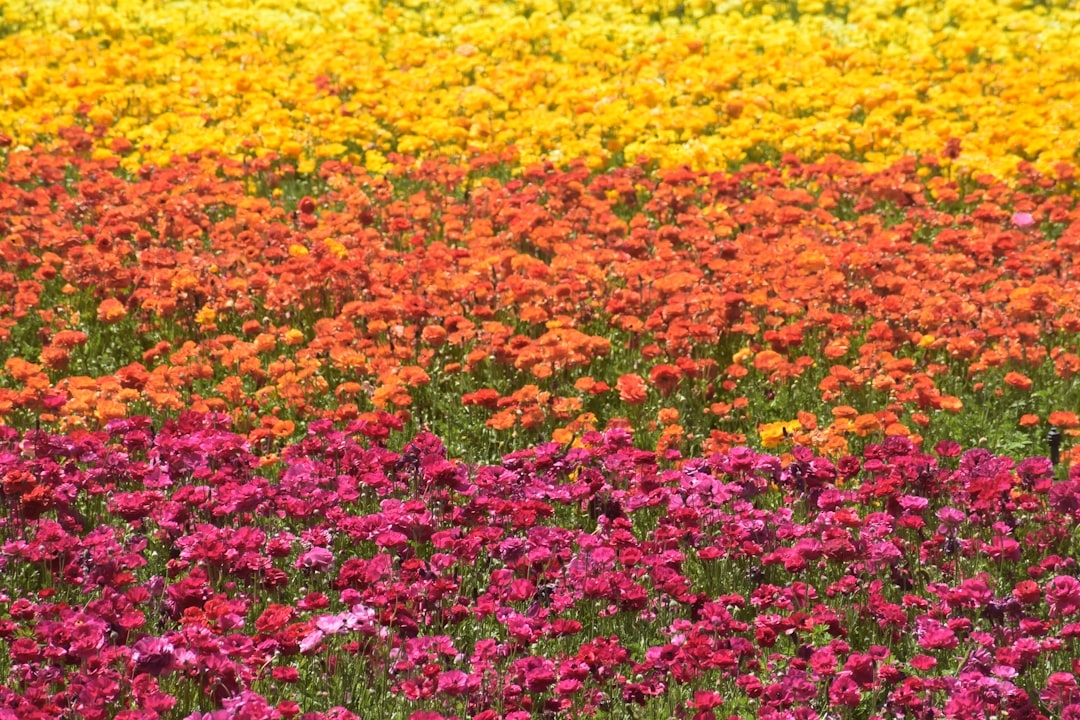
High UV exposure at altitude also intensifies pigmentation. Growers in Colorado and the Mountain West frequently report more vivid flower color compared to sea-level counterparts growing identical varieties. This is pigmentation as sun protection — anthocyanins absorb UV radiation and protect the plant\’s reproductive tissue.
Flower Color vs. Foliage Color: Not the Same Mechanism
A common point of confusion for newer gardeners: why do some plants have red or purple leaves year-round, while others only show color in flowers?
Foliage color in plants like purple smokebush (Cotinus coggygria \’Royal Purple\’) or \’Midnight Wine\’ weigela results from anthocyanins in leaf cells that suppress the green expression of chlorophyll. These plants are producing anthocyanin continuously in vegetative tissue, not just in flowers. This is a genetic trait controlled by different regulatory genes than floral pigmentation — which is why you can have a plant with deep purple foliage and pale pink flowers, like some Heuchera cultivars.
Flower color and leaf color are related chemistry but independently controlled biology. Breeding for one doesn\’t reliably affect the other, which is why it takes plant breeders multiple generations to stabilize a specific combination.
Practical Tips for Using Color Science in Your Garden
- Test and adjust soil pH before planting: If you\’re growing hydrangeas and want reliable blue, aim for pH 5.5 or below. Use aluminum sulfate to lower pH, and retest every spring — pH drifts over time.
- Plant for the full color season: Use the seasonal calendar above to ensure something is always in bloom. A garden with a color gap between June and September loses pollinator traffic and visual interest simultaneously.
- Choose white flowers deliberately for evening gardens: If you have an outdoor seating area used at dusk, a border of white phlox, white echinacea, or gaura provides maximum visual impact after sundown.
- Use carotenoid-heavy flowers (yellow, orange) in hot, dry spots: They\’re pigment-stable under heat stress. Anthocyanin-rich blues and purples are more susceptible to fading in intense afternoon sun.
- To deepen red rose color: Mulch heavily to keep roots cool, water consistently, and fertilize with a low-nitrogen, high-phosphorus formula in late summer. Phosphorus supports anthocyanin synthesis.
Frequently Asked Questions
Why are there no truly black flowers?
No plant produces a true black pigment. What we call “black” flowers — like \’Queen of Night\’ tulips or \’Black Baccara\’ roses — are actually very deep reds and purples with extremely high anthocyanin concentrations that absorb most visible light, creating a near-black appearance.
Why do flowers change color as they age?
As flowers age, pH changes within petal cells can shift anthocyanin color expression. Cell damage also causes pigment breakdown. Some flowers, like lungwort (Pulmonaria), deliberately change color from pink to blue after pollination — a signal to bees that nectar is no longer available.
Can soil affect flower color?
Yes. Soil pH is the most direct environmental influence on flower color in anthocyanin-producing plants. Hydrangeas are the best-known example: acidic soil (pH below 6.0) produces blue flowers, while alkaline soil (pH above 7.0) produces pink. Iron and aluminum availability, both linked to pH, drive this shift.
Why do some flowers have multiple colors or patterns?
Multi-colored flowers result from different pigment cells activating in different zones of the petal, controlled by regulatory genes that switch on or off depending on position. Pansy “faces” and the streaking in parrot tulips are examples of this patterned gene expression, sometimes called “color breaks.”
Do flower colors affect how long cut flowers last?
Indirectly, yes. Carotenoid-pigmented flowers (yellow, orange) tend to hold color longer in a vase than anthocyanin-pigmented ones (blue, purple, red), because carotenoids are more chemically stable. Keep cut flowers in cool water, away from direct sun, and recut stems at a diagonal every two to three days to extend vase life regardless of color.
Take the Science Into Your Next Planting Season
Every color in your garden is the result of specific chemistry interacting with specific environmental conditions. That\’s not just interesting — it\’s actionable. Now that you know anthocyanins respond to pH, you can stop guessing why your hydrangeas aren\’t the blue you wanted and start testing your soil. Now that you know why flowers come in different colors across the season, you can map your planting calendar to keep pollinators active from February through October.
Pull your soil test kit before the next planting window. Map your current bloom calendar against the seasonal color guide above and find the gaps. Then fill them — deliberately, with the chemistry and the pollinators in mind. That\’s how a hobby garden becomes something that actually works.