Contents:
- What Does “Feelings” Even Mean for a Flower?
- The Real Flowers Feelings Science: What Research Has Found
- Plants Respond to Touch and Sound
- Flowers Signal Stress and “Call for Help”
- The Mimosa pudica Effect
- Do Flowers Respond to Human Presence?
- Practical Tips: Treating Your Flowers Well (With Science on Your Side)
- Quick Budget Breakdown: Tools That Support Healthy Plant Response
- Frequently Asked Questions About Flowers Feelings Science
- Do flowers feel pain?
- Can flowers sense human emotions?
- Do plants communicate with each other?
- Is talking to your plants actually helpful?
- What flower is most scientifically proven to respond to stimuli?
- What This Means for Your Garden This Season
Your flowers might actually know you\’re there. That\’s not a fairy tale — it\’s the starting point of one of the most fascinating debates in modern plant biology, and the science of flowers feelings is far stranger and more compelling than most people expect.
We\’ve all talked to our houseplants. Maybe you whisper encouragement to your roses or apologize when you forget to water the petunias. But is there any real science behind the idea that flowers respond to the world around them — or even to us? Spoiler: yes, and it\’s genuinely wild.
What Does “Feelings” Even Mean for a Flower?
First, a quick reality check. Flowers don\’t have brains, nervous systems, or neurons. They cannot feel pain the way a dog or a human does. So when scientists talk about plant perception and response, they\’re working with a very different definition of “feeling” — one rooted in biology, not emotion.
What plants do have is a sophisticated system of chemical signaling. When a plant is stressed — by drought, pest damage, or physical touch — it releases specific compounds that trigger internal responses. That\’s a form of environmental awareness, even if it\’s nothing like human consciousness.
Think of it as the difference between a thermostat and a mind. The thermostat “knows” it\’s cold and responds. It doesn\’t feel cold. Plants operate somewhere in that fascinating gray zone — except they\’re far more complex than any thermostat ever built.
The Real Flowers Feelings Science: What Research Has Found
Plant science has made some genuinely jaw-dropping discoveries over the past two decades. Here are the highlights that every curious gardener should know.
Plants Respond to Touch and Sound
A landmark 2019 study from Tel Aviv University found that evening primrose flowers produce a measurable acoustic response — essentially a sweeter nectar — within three minutes of detecting the vibrations of a bee\’s wingbeats. The flowers were acting on sound. That\’s not instinct in the traditional sense; it\’s a rapid, targeted response to environmental input.
Similarly, research from the University of Missouri showed that Arabidopsis plants (a common research flower) can distinguish between the vibrations caused by a caterpillar chewing on their leaves versus wind or other noise — and they ramp up their chemical defenses specifically in response to predator vibrations.
Flowers Signal Stress and “Call for Help”
When a flower is damaged — say, a petal torn by an insect — it releases airborne chemicals called volatile organic compounds (VOCs). Neighboring plants of the same species detect these VOCs and begin producing defensive enzymes before they\’re even attacked. It\’s a chemical alarm system, and it works across distances of several feet.
Some researchers call this “plant communication.” Others prefer the more cautious term “information transfer.” Either way, flowers are sending and receiving signals constantly — it\’s just happening in a chemical language we can\’t hear.
The Mimosa pudica Effect
If you\’ve ever touched a Mimosa pudica — the “sensitive plant” — you\’ve seen plant response in action. Its leaves fold inward within seconds of contact. What\’s remarkable is a 2016 study published in Oecologia showing that Mimosa plants can actually learn to stop responding to a repeated, harmless stimulus. That\’s a basic form of habituation — the same cognitive process that lets humans stop jumping at a noise they\’ve heard a hundred times.
“Plants are not passive organisms,” says Dr. Renata Flores, a horticulturist with 18 years of experience at the Denver Botanic Gardens. “They\’re constantly monitoring their environment and making chemical decisions in real time. Whether we call that \’feeling\’ is a philosophical question — but the biology is undeniably active.”
Do Flowers Respond to Human Presence?
This is the question most home gardeners really want answered. And honestly? The evidence is suggestive but not conclusive.
Studies have shown that plants grow differently under human touch — a process called thigmomorphogenesis. Regular gentle touching causes many plants to grow shorter and stockier, which researchers believe is an adaptation to wind and physical stress. So yes, your hands-on attention literally shapes your flowers\’ physical development.
As for talking to your plants — the vibrations from your voice are real, and some small-scale studies suggest plants near consistent sound sources (including voices) show slightly increased growth rates. The BBC even ran a well-publicized Royal Horticultural Society experiment in 2009 where plants grown with recorded human voices outgrew silent controls by an average of 1 inch over a month.
None of this means your marigolds miss you when you\’re on vacation. But it does mean that the environment you create around your flowers — including the vibrations, the touch, the care — has measurable physical effects.
Practical Tips: Treating Your Flowers Well (With Science on Your Side)
You don\’t need a lab to apply these findings. Here\’s how to use plant biology to grow healthier, happier-looking flowers:
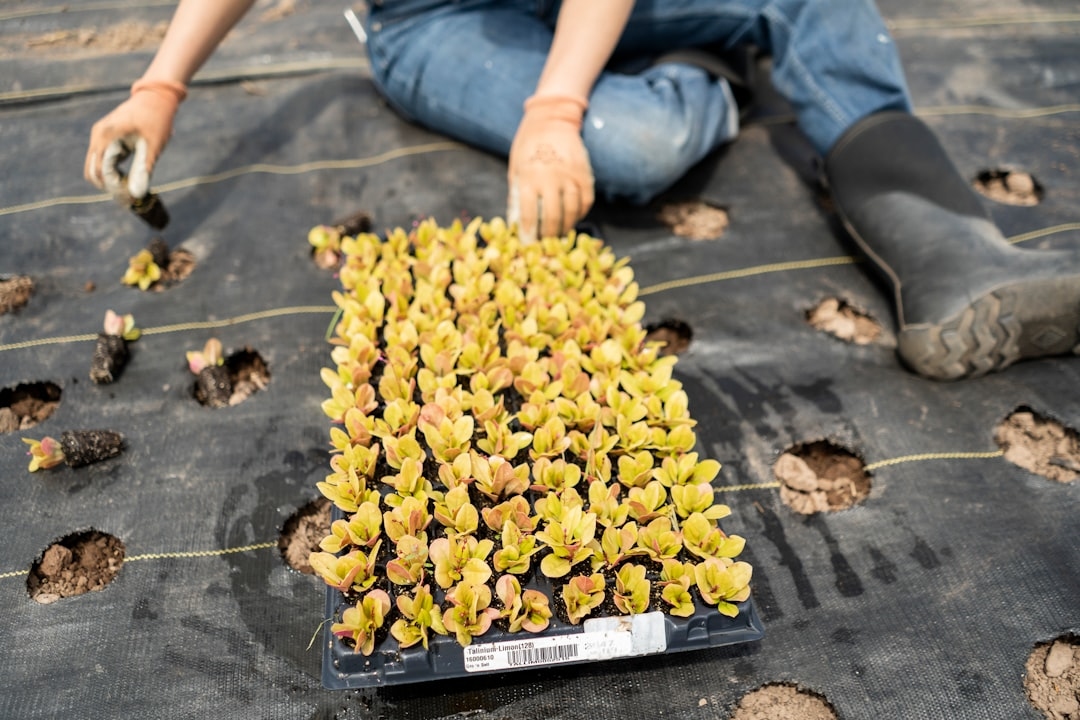
- Touch your seedlings gently and regularly. Running your hand lightly over seedlings for 30 seconds a day encourages stronger stems through thigmomorphogenesis. Free, and it takes seconds.
- Don\’t ignore stress signals. Yellowing, wilting, or distorted petals are your flower\’s VOC alarm system made visible. Act fast — stressed plants spread chemical distress signals to neighbors.
- Group similar plants together. Companion planting isn\’t just folklore. Flowers that share VOC languages (like marigolds and tomatoes) benefit from each other\’s chemical alerts.
- Talk or play music near your garden. Even if the effect is modest, low-frequency vibrations in the 115–250 Hz range have shown the most consistent results in growth studies. That\’s roughly the range of a human speaking voice or acoustic guitar.
- Minimize unnecessary cutting or damage. Every wound triggers a chemical stress response that costs the plant energy. Deadhead purposefully, and use clean, sharp tools to minimize tissue trauma.
Quick Budget Breakdown: Tools That Support Healthy Plant Response
You don\’t need to spend much to create a flower-friendly environment:
- Quality pruning shears: $15–$35 (clean cuts reduce stress response vs. tearing)
- Small Bluetooth speaker for garden music: $20–$50
- Companion planting guide or seed mix: $8–$20
- Organic compost to reduce pest stress: $10–$25 for a 1 cubic foot bag
Total investment to create a science-backed, flower-friendly garden setup: under $130, most of which you probably already own.
Frequently Asked Questions About Flowers Feelings Science
Do flowers feel pain?
No — not in any way comparable to animals. Flowers lack neurons and a central nervous system. They do release chemical stress signals when damaged, but there is no evidence of subjective pain experience.
Can flowers sense human emotions?
There\’s no scientific evidence that flowers detect human emotions directly. However, they do respond to touch, sound vibrations, and environmental changes that human presence creates.
Do plants communicate with each other?
Yes, through volatile organic compounds (VOCs) released into the air and, in some species, through fungal networks in the soil. Neighboring plants detect these signals and can activate defensive responses before being attacked.
Is talking to your plants actually helpful?
Possibly. Some studies suggest consistent sound vibrations — including human voices — may modestly improve plant growth. The Royal Horticultural Society found voice-exposed plants grew about 1 inch more than silent controls over one month.
What flower is most scientifically proven to respond to stimuli?
Mimosa pudica (the sensitive plant) is the most documented. It responds to touch within seconds and has demonstrated basic learning behavior in peer-reviewed research published in Oecologia in 2016.
What This Means for Your Garden This Season
The science doesn\’t confirm that your flowers love you back — but it does confirm they\’re not indifferent to you either. Every time you weed carefully, water consistently, deadhead with sharp scissors, or just spend time near your beds, you\’re participating in a biological conversation that\’s been going on for 400 million years of plant evolution.
So keep talking to your dahlias. Touch your seedlings. Group your companion flowers thoughtfully. The research backs you up — and your garden will show it. Ready to put the science to work? Start with one small change this week: spend 60 seconds gently brushing your hand over your seedlings each morning and track the difference in stem strength after 30 days. You might be surprised what you find.