Contents:
- What “No Sunlight” Actually Means for Plant Growth
- Which Flowers Can Actually Survive (and Bloom) in Low-Light Jars
- The Terrarium Advantage
- Setting Up a Jar Garden With No Direct Sunlight
- Choosing the Right Artificial Light
- A Real-Life Lesson in Jar Gardening Gone Wrong (and Right)
- Practical Tips for Long-Term Success
- When It\’s Not Worth the Effort
- Frequently Asked Questions
- Can flowers grow in a jar with no sunlight at all?
- What is the easiest flower to grow in a jar indoors?
- How much light do jar flowers actually need?
- Will flowers in a jar survive longer if sealed?
- Can you grow flowers in a jar using only a desk lamp?
- Start Small, Then Scale
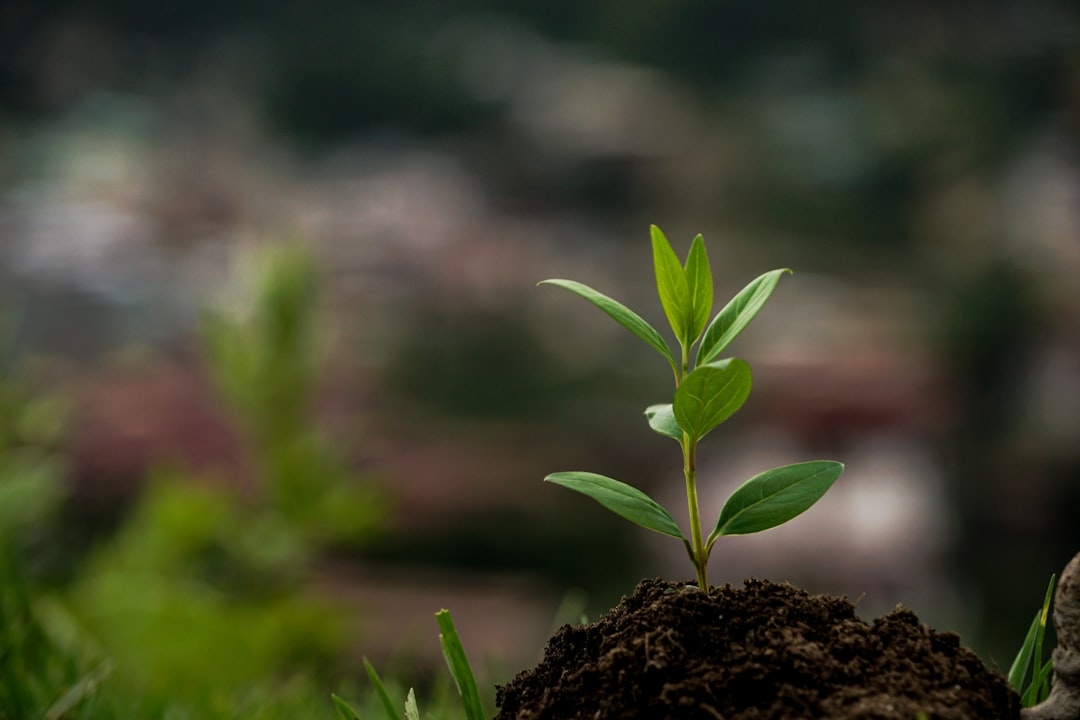
Picture a dusty corner shelf, a mason jar filled with soil, and a single green shoot pushing upward — no window in sight, just the soft hum of a lamp overhead. It sounds like something from a fairy tale, but this scene plays out in apartments, offices, and basements across the country every day. The question is whether it\’s sustainable, or just a slow fade to yellow.
Can flowers grow in a jar with no sunlight? The short answer is: some can, under the right conditions. But the full answer is more nuanced — and far more interesting — than a simple yes or no.
What “No Sunlight” Actually Means for Plant Growth
Plants don\’t technically need sunlight — they need light. Sunlight is simply the most abundant and convenient source. Photosynthesis requires light energy in the 400–700 nanometer wavelength range (known as photosynthetically active radiation, or PAR). A south-facing window delivers this naturally. A grow light can replicate it artificially. A dimly lit hallway? That\’s where things get complicated.
True darkness — zero light — will kill almost any flowering plant within days. But low light and no direct sunlight are different conditions entirely. Many plants have evolved under forest canopies where they receive as little as 50–100 foot-candles of light. For context, a well-lit office averages around 300–500 foot-candles, while a windowless room with standard overhead lighting might offer 50–150 foot-candles.
The key question when trying to make flowers grow in a jar with no sunlight is whether you can provide a consistent substitute light source — and whether you\’ve chosen a plant species that can actually work with what you\’ve got.
Which Flowers Can Actually Survive (and Bloom) in Low-Light Jars
Not every flower is a candidate. Sun-loving species like sunflowers, zinnias, and most roses need 6–8 hours of direct light daily. Push them into a jar in a dark room and they\’ll etiolate — stretching desperately toward any available light source before eventually collapsing.
These are the flowers and flowering plants that genuinely tolerate low-light jar environments:
- Peace Lily (Spathiphyllum): One of the most forgiving flowering houseplants available. It blooms in as little as 25 foot-candles and grows well in enclosed containers. Its white spathe flowers can last 4–6 weeks.
- Pothos with Flowering Relatives (Epipremnum): While pothos itself doesn\’t flower, its close relatives in the Araceae family do — and they thrive in similar low-light jar setups.
- African Violet (Saintpaulia): A classic low-light bloomer. African violets flower almost continuously under fluorescent or LED grow lights, making them ideal for windowless spaces. They prefer 12–14 hours of artificial light at 200–400 foot-candles.
- Impatiens: One of the few true flowering annuals that tolerates low light. In a humid jar terrarium setup, they can bloom for months with indirect or artificial light.
- Begonias (Wax Begonia): Compact, prolific bloomers that adapt to indirect light. Wax begonias need as little as 2–3 hours of indirect light daily or equivalent artificial light.
The Terrarium Advantage
Growing flowers in a sealed or semi-sealed jar creates a microenvironment with elevated humidity — often 70–90% relative humidity versus the typical indoor 30–50%. This actually benefits many low-light flowers, which evolved in humid forest floors. The jar\’s glass walls also amplify available light slightly by reducing airflow that would otherwise scatter photons. It\’s a small but measurable advantage.
Setting Up a Jar Garden With No Direct Sunlight
The container matters as much as the plant. Wide-mouth mason jars (quart or half-gallon size) give roots enough horizontal spread, but the real priority is drainage. Most jars have none, so you\’ll need to layer your growing medium strategically:
- Drainage layer: 1–2 inches of pea gravel or horticultural charcoal at the bottom to prevent root rot.
- Activated charcoal: A thin ½-inch layer filters toxins and keeps anaerobic bacteria in check — essential in a sealed system.
- Growing medium: 2–3 inches of a peat-free potting mix blended with perlite (roughly 3:1 ratio) for aeration.
- Top dressing: Optional moss layer helps retain moisture and creates a finished look.
Water sparingly. A common mistake is overwatering jar gardens — without drainage holes, excess moisture has nowhere to go. For a quart-size jar, 2–3 tablespoons of water every 10–14 days is usually sufficient for most low-light flowering plants.
Choosing the Right Artificial Light
If you\’re relying entirely on artificial light, full-spectrum LED grow lights are the current gold standard. Look for bulbs rated at 2,000–5,000K color temperature with a CRI (Color Rendering Index) of 90 or above. Position the light 6–12 inches above the jar for 12–16 hours per day. A basic timer plug ($10–$15) removes the guesswork entirely.
🌿 What the Pros Know
Professional terrarium designers often use T5 fluorescent or full-spectrum LED strip lights mounted directly beneath a shelf rather than overhead. This eliminates shadows entirely and delivers uniform PAR distribution across multiple jar gardens simultaneously. A 2-foot T5 fixture costs around $30–$50 and can support 4–6 jars at once — far more efficient than individual grow bulbs per container.
A Real-Life Lesson in Jar Gardening Gone Wrong (and Right)
A reader named Cassandra from Portland shared her experience trying to grow African violets in her windowless home office. Her first attempt failed within three weeks — the leaves yellowed, the stems went limp, and the soil developed a musty smell. She\’d placed the jar in a corner with only overhead fluorescent office lighting and watered it like a regular potted plant.
Her second attempt changed three things: she switched to a dedicated 5,000K LED grow lamp on a 14-hour timer, reduced watering to once every two weeks, and added a charcoal layer to her jar\’s base. Eight weeks later, her African violet was producing its third cluster of purple blooms. Same plant species, same jar, completely different outcome — because the light source and watering discipline made all the difference.
Cassandra\’s story is a good reminder that making flowers grow in a jar with no sunlight isn\’t magic. It\’s methodology.
Practical Tips for Long-Term Success
- Rotate the jar quarterly: Even with artificial light, plants develop directional growth. A 90-degree rotation every few months keeps growth balanced.
- Fertilize lightly: Low-light plants have reduced metabolic rates. A diluted liquid fertilizer (quarter-strength) applied once every 6–8 weeks during the growing season is plenty. Over-fertilizing in a sealed jar builds up salt deposits that damage roots.
- Watch for fungus gnats: The moist, enclosed environment can attract them. A layer of sand or fine gravel on top of the soil discourages egg-laying.
- Prune spent blooms immediately: Dead flowers left in a jar accelerate mold growth. Remove them at the base with clean scissors as soon as petals begin to drop.
- Repot annually: Even in a jar, roots eventually become crowded. Move to a slightly larger container — roughly 2 inches wider in diameter — once you see roots circling the bottom drainage layer.
When It\’s Not Worth the Effort
Honesty matters here. If your space genuinely has zero ambient light — a storage closet, a basement with no fixtures — then the investment in grow lighting infrastructure may not make sense for a single jar. At that point, you\’re essentially building a grow tent, not a charming terrarium.
For truly dark spaces, consider plants that require no light at all for display purposes: dried flower arrangements, preserved moss installations, or air plant sculptures that can periodically “recharge” under light elsewhere in the home. These aren\’t substitutes for the living jar garden, but they fill the aesthetic role without the maintenance overhead.
Frequently Asked Questions
Can flowers grow in a jar with no sunlight at all?
Yes, certain flowers can grow in a jar without sunlight if they receive adequate artificial light instead. Species like African violets, peace lilies, and wax begonias can bloom under full-spectrum LED grow lights providing 200–400 foot-candles for 12–16 hours per day.
What is the easiest flower to grow in a jar indoors?
African violets are widely considered the easiest flowering plant for indoor jar gardens. They\’re compact, bloom almost continuously under artificial light, and tolerate the high humidity of enclosed jar environments.
How much light do jar flowers actually need?
Most low-light flowering plants need a minimum of 50–200 foot-candles of light to survive and 200–400 foot-candles to bloom reliably. A dedicated grow lamp positioned 6–12 inches above the jar for 12–16 hours daily meets this requirement effectively.
Will flowers in a jar survive longer if sealed?
Sealed jars create a self-sustaining humidity cycle that benefits moisture-loving species like peace lilies and begonias. However, sealing requires very precise watering beforehand — too much moisture in a sealed environment leads to mold and root rot within weeks.
Can you grow flowers in a jar using only a desk lamp?
A standard incandescent desk lamp is not effective — it produces heat but very little usable PAR light. A full-spectrum LED bulb (5,000K, minimum 800 lumens) in a desk lamp fixture, however, can support low-light flowering plants at close range.
Start Small, Then Scale
The best way to approach jar gardening without sunlight is to begin with one African violet, one proper grow bulb, and a simple timer. Master that system before expanding. Once you\’ve seen a plant bloom in a windowless space under your care, the methodology becomes second nature — and the possibilities for what you can grow, and where, start to feel genuinely exciting.
Browse flowering plants suited for low-light terrariums at your local nursery, or look for starter terrarium kits online — many come with pre-selected species, appropriate soil mixes, and basic light recommendations already bundled together. It\’s a much gentler learning curve than starting from scratch.